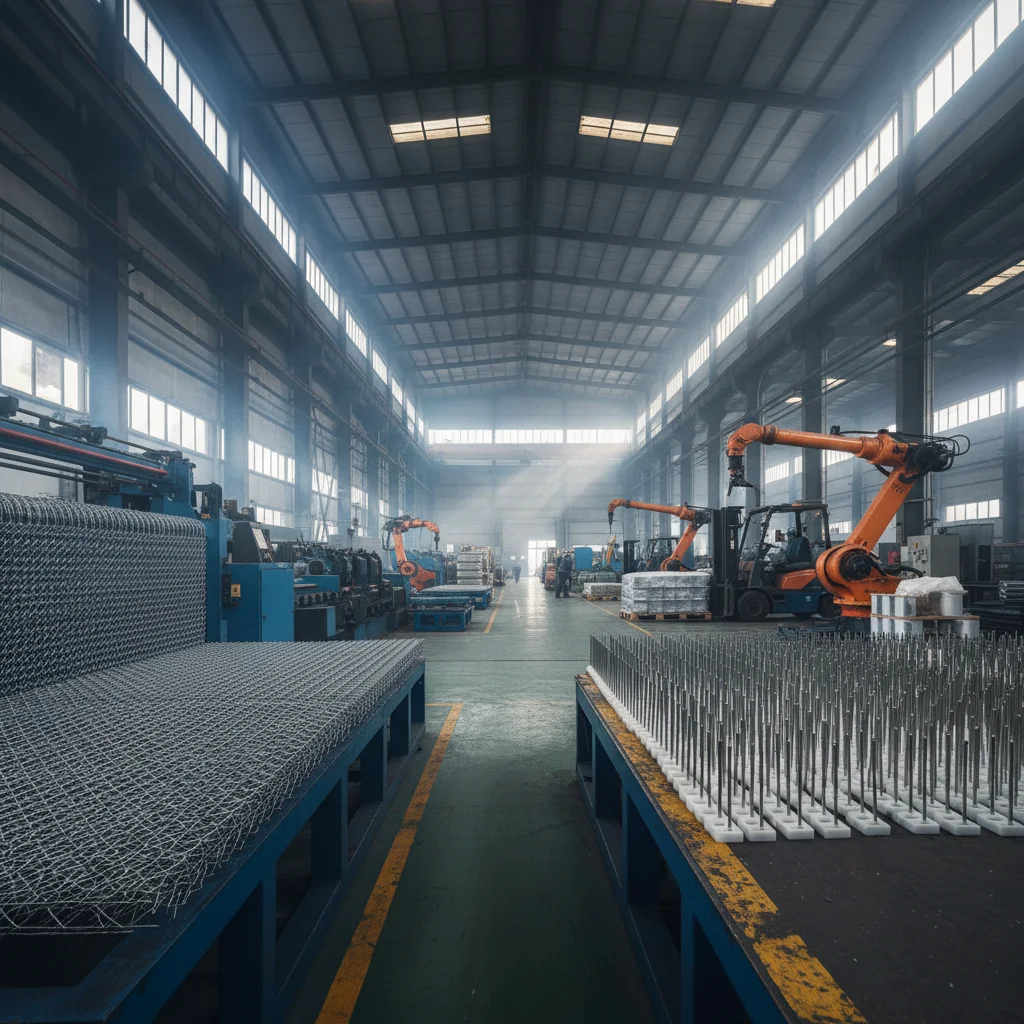
Honestly, the whole industry’s buzzing about these new composite materials. Not just plastics, you know? We're talking about blends, stuff with graphene mixed in, trying to get that strength-to-weight ratio down. It’s…a bit much sometimes. Everyone’s chasing the next miracle material, but forgetting the basics. I was at a factory in Ningbo last month, and they were showing off this carbon fiber reinforced polymer… smelled like burnt toast, if you can believe it. And the dust? Forget about it. You need a full hazmat suit.
And it's not just the materials themselves, it’s the tolerances. Have you noticed how everyone wants everything tighter, smaller, more precise? It looks great on paper, but try assembling it on a windy construction site with guys wearing gloves. It's a nightmare. We always build in a little wiggle room. Always. Don’t listen to the designers on that one. They’ve never actually built anything.
Speaking of building, the real test isn't in the lab. It’s out there, in the rain, in the sun, getting dropped, kicked, covered in concrete. We started doing impact tests with actual construction debris - bricks, rebar, even a toolbox once. Much more informative than a standardized pendulum swing, trust me. It showed us a weakness in the polymer casing we wouldn't have caught otherwise.
Strangely enough, a lot of people think we just slap things together. They don’t realize the amount of back-and-forth with the material suppliers. We're constantly looking at different grades of steel, different types of polymers. The Chinese suppliers are getting better, really better, but the consistency is still an issue sometimes. And the lead times…don’t even get me started.
Right now, everyone’s obsessed with lightweighting. Makes sense, reduces shipping costs, easier to handle on site. But lighter doesn't always mean better. You need to balance that with durability. I encountered this at a prefabrication plant in Shanghai last time; they’d gone too thin on the steel supports, and they were bending under the weight of the panels. A total mess. We ended up having to reinforce everything.
These mouse trap manufacturers are versatile and find applications in diverse sectors. Primarily, they are used in the construction industry for structural supports, enclosures, and modular building components. Increasingly, they're being adopted in the automotive sector for lightweighting vehicle frames and body panels. We also see applications in renewable energy, specifically in wind turbine components, and even in specialized packaging solutions where durability and protection are paramount. It’s really a wide range, honestly.
Lead times can vary significantly depending on the complexity of the customization and the availability of raw materials. For relatively simple modifications, like a different color or size, we can typically deliver within 4-6 weeks. However, for more complex customizations, involving new tooling or specialized material sourcing, it can take 8-12 weeks, sometimes even longer. It all comes down to planning and communication. It's really hard to get a definitive answer these days.
We have a rigorous quality control process in place at every stage of production. This includes incoming material inspection, in-process inspection during manufacturing, and final product inspection before shipping. We use a combination of automated testing equipment and manual inspection by trained technicians. We also conduct regular audits of our suppliers to ensure they meet our quality standards. We don’t want any surprises on the jobsite.
The initial cost of some of these advanced materials can be higher than traditional steel. However, when you consider the long-term benefits – reduced weight, increased durability, corrosion resistance – the total cost of ownership can actually be lower. Plus, the reduced weight can lead to significant savings in transportation costs. It’s not always a straight comparison. You really have to look at the entire picture.
We are committed to sustainable manufacturing practices. Many of these materials are recyclable, and we actively work to minimize waste during production. We also consider the energy consumption and carbon footprint of our manufacturing processes. It’s an ongoing effort, and we’re constantly looking for ways to improve our environmental performance. It’s more than just a trend these days; it's the right thing to do.
Yes, certain grades of these mouse trap manufacturers are specifically designed to withstand extreme temperature fluctuations. We offer materials that can perform reliably in temperatures ranging from -40°C to +85°C, and even higher in some cases. The specific temperature range will depend on the material composition and the application requirements. We've tested them extensively in simulated environments.
Ultimately, these new mouse trap manufacturers represent a significant advancement in materials technology, offering a compelling combination of durability, lightweighting, and versatility. While there are challenges associated with cost and customization, the benefits often outweigh the drawbacks, particularly in demanding applications where performance and longevity are critical.
Looking ahead, I think we’ll see even more innovation in this space, with the development of new materials and manufacturing processes. The key will be to focus on practicality, sustainability, and the needs of the end-user. And remember, no matter how advanced the technology gets, the worker on the ground will always be the ultimate judge of whether it works or not. Visit our website at www.hbarcherfish.com to learn more.